

Welcome to the 159 new subscribers since last week. The Acquired Briefing community has just crossed 1,000 subscribers since we went live in June. It’s a great week to join because Ben and David just released a special episode.
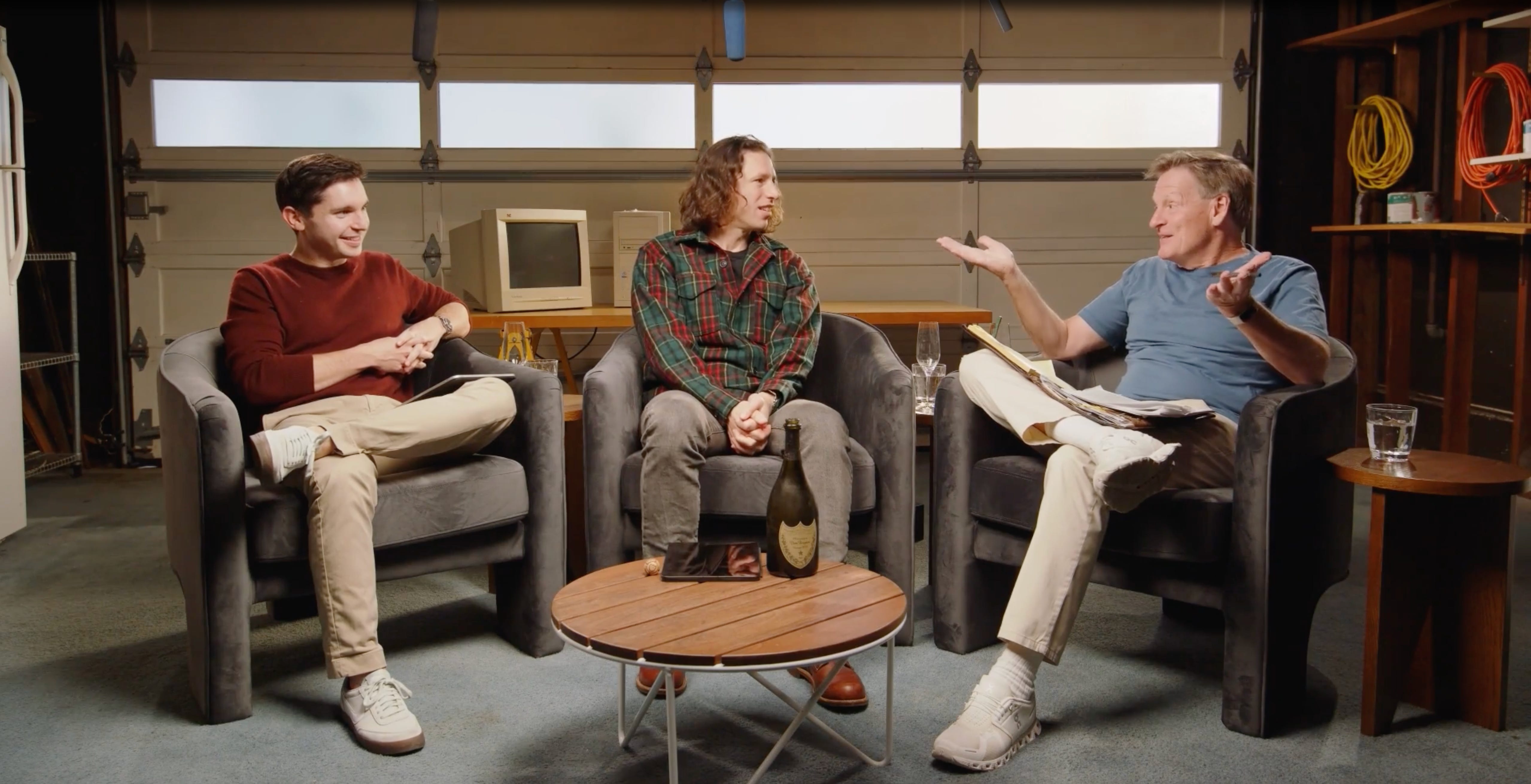
In this 10-year anniversary special, hosts Ben Gilbert and David Rosenthal are joined by author Michael Lewis (Moneyball, The Big Short) to turn the analytical lens of Acquired onto the podcast itself. Recording from the historic garage where Google was founded, the trio dissects how two venture capitalists turned a niche hobby into a massive media business by intentionally breaking almost every rule of the podcasting industry.
The discussion frames Acquired not just as a show, but as a unique business case study. They explore the show’s transition from a low-confidence “transactional” podcast to a high-production “event” platform. The core thesis is that Acquired succeeded by applying specific lessons learned from the companies they cover—such as Berkshire Hathaway, the NFL, and Hermès—directly to their own operations.
Kyle’s Rating: 9/10
A meta-episode like this requires a strong outside voice, and Michael Lewis perfectly fills that role to transform what could be self-indulgent into the canonical explanation of Acquired’s success. Even if you typically skip special episodes, this is a perfectly executed exception that reveals the true mechanics behind the magic.
Acquired History & Evolution
Phase 1: The “Acquisitions” Era (2015–2018):
Concept: Started as a hobby to analyze technology acquisitions to improve their skills as VCs.
Style: Short episodes (40 mins), rigid format, low production value, and a lack of confidence (described by Lewis as “flat”).
Phase 2: The “IPO & Tech” Era (2018–2022):
Shift: Broadened scope to IPOs and general company histories (e.g., Tesla, Uber), realizing listeners wanted “stories,” not just deal analysis.
Growth: Audience expanded significantly during the tech boom.
Phase 3: The “Modern Acquired” Era (2022–Present):
Catalyst: The 2022 market crash caused a 40% revenue drop.
Strategy: Instead of chasing volume to recover revenue, they doubled down on quality. They moved to a “scarcity” model (fewer episodes, longer runtime, deeper research) and committed to being the “last ones standing” by building a durable luxury brand.
The Acquired Methodology
How the show is built, researched, and structured.
The Three Pillars of a Great Episode
Ben and David have refined their selection criteria down to a specific formula. For a company to merit the “Acquired treatment” (and the hundreds of hours of research that entails), it must satisfy three conditions:
The Hero’s Journey: There must be a compelling protagonist and a clear narrative arc moving from obscurity to ubiquity. It isn’t enough for a company to be successful; it must have struggled, pivoted, or overcome existential threats.
A Secret Hiding in Plain Sight: The subject must be something people encounter daily but don’t fully understand. The episode must peel back the curtain on the “machine” behind the consumer experience (e.g., the Costco business model).
Importance in the World: The stakes must be high. They focus exclusively on institutions that have fundamentally shaped the modern world (e.g., Google, Standard Oil, TSMC), ensuring the story feels timeless rather than news-cycle dependent.
The Research Process
The process begins with “immersion,” where the hosts independently read every available book, 10-K, and canonical article about the subject. Crucially, they avoid speaking to insiders during this initial phase to prevent bias. Once they have reached “80% confidence” and identified the narrative throughline, the process shifts to primary sourcing. As of 2023, this involves making 25 to 40 phone calls per episode to experts and executives. The goal isn’t just to gather facts, but to ask: “What is the most misunderstood thing about this company?” They then synthesize these hundreds of hours of input into a structured outline.
Viewpoint on Storytelling
The hosts believe history is not just a sequence of events, but a study of causality and emotion. Lewis cites E.M. Forster’s distinction: “The queen died and then the king died” is a plot; “The queen died and then the king died of heartbreak” is a story. Acquired aims for the latter. They also embrace the concept of “lossy compression”—realizing they cannot transfer their exact thoughts into the listener’s brain. Instead, they balance preparation with improv, often throwing the script away during recording to ensure the conversation feels alive. This risk-taking creates a dynamic where the audience feels they are discovering insights with the hosts.
Why Use Hamilton Helmer’s Framework?
Acquired ends episodes with a “Playbook” section, utilizing Hamilton Helmer’s 7 Powers framework. They adopted this because it is the most complete “plain English” checklist for business durability. It forces them to rigorously categorize why a company makes money—is it “Network Effects”? “Scale Economies”? “Counter-Positioning”? This framework serves as the analytical counterweight to the narrative storytelling, ensuring the episode “lands the plane” by answering the “so what?” question for investors and operators.
The Business of Acquired
How the show is monetized and leveraged.
Business & Advertising Philosophy
Acquired operates on a “high-trust, low-volume” model. They explicitly reject programmatic advertising, viewing it as disrespectful to the listener. Instead, they seek “Switzerland” partners—universally relevant B2B companies like J.P. Morgan Payments or ServiceNow—that don’t require taking sides in industry rivalries. Their goal is to deliver massive ROI to a small number of partners rather than meager ROI to many. Because their audience consists of decision-makers, a single converted customer can be worth millions, allowing them to charge premium rates while keeping ad load low (2-3 spots per 4-hour episode).
Acquired Venture Capital (Strategy is Access)
Ben and David launched Acquired Capital to solve a specific problem: in growth-stage investing, the challenge isn’t “picking winners” (everyone knows who they are), but getting access to them. Their strategy is to use the podcast as a wedge. By working with top-tier companies as sponsors, they build deep relationships with founders and demonstrate value as strategic partners. When these companies raise their next round, Acquired asks to invest. Founders view them as a strategic asset rather than “dumb money,” granting them access to competitive rounds.
Operational Leverage
The business generates massive revenue with zero full-time employees besides the founders (and their editor, Steven). They rely on extreme operating leverage—the effort to create an episode is fixed, regardless of whether 10,000 or 10 million people listen. This decoupling of inputs and outputs allows for high margins and scalability without organizational bloat.
The 10 Lessons from 10 Years
Lessons learned from covering great companies, applied to Acquired.
1. Scarcity and Spectacle (NFL)
Ben and David looked to the NFL to solve the “hamster wheel” problem of modern media. While baseball plays 162 games a year, relying on volume to sell inventory, the NFL plays only 17. By keeping the product scarce, the NFL turns every single game into an appointment-viewing event. Acquired applied this by aggressively reducing their output from 26 episodes a year to just 8-10. This scarcity signals to the audience that a new episode notification is a “must-listen” moment, not just background noise.
This lesson extends to the concept of Spectacle. Because the podcast is not a daily habit, the hosts realized they needed to manufacture moments of “heat and light” to remain culturally relevant. Just as the NFL anchors its season with the Super Bowl, Acquired invests in massive, high-production live events at venues like the Chase Center and Radio City Music Hall. These events reach a fraction of their total audience (6,000 people vs. millions), but the perception of the spectacle elevates the brand’s prestige. By combining scarcity in the feed with high-visibility live experiences, they created a media property that feels “larger than life” and commands the attention of the world’s busiest people.
2. Embrace Constraints, Obsess Over Craft (Hermes)
From the luxury house Hermès, Acquired learned to stop apologizing for their constraints and instead feature them as a central value proposition. For years, the hosts felt inadequate because they lacked a production team and couldn’t churn out weekly content. However, they realized that Hermès maintains its legendary brand equity precisely because it refuses to scale production beyond what can be handcrafted by a single artisan.
Acquired decided to lean into this “artisanal” approach. They treat every episode as a bespoke, handcrafted product—”made with love”—where the hosts themselves do the research, the outlining, and the deep editing. They work with a single audio engineer, Stephen, rather than a factory-style production house. This constraint ensures that the quality never dilutes. Just as a Birkin bag is valuable because it cannot be mass-produced, an Acquired episode retains its value because it cannot be rushed or outsourced. This obsession with craft allows them to build a durable, luxury brand in a medium (podcasting) that is typically defined by commoditized, disposable content.
3. Circle of Competence - The “Too Hard” Pile (Berkshire Hathaway)
Studying Warren Buffett and Charlie Munger at Berkshire Hathaway gave Ben and David the permission to say “no.” Buffett famously sorts opportunities into “Yes,” “No,” and “Too Hard.” He acknowledges that he doesn’t need to be smart about everything, only about the few things he chooses to swing at. Acquired adopted this “Too Hard” pile as a strategic filter to protect their time and focus.
This manifested most notably in their rejection of Hollywood. Despite frequent offers to adapt their IP into documentaries or TV shows, they consistently placed these opportunities in the “Too Hard” pile. They recognized that navigating the complex, foreign machinery of Hollywood would distract from their core competency. Additionally, they mirrored Berkshire’s famously low overhead. Despite generating significant revenue, Acquired operates without a large staff, sales team, or middle management. This capital efficiency allows them to avoid the pressure to grow for growth’s sake, keeping their decision-making pure and focused entirely on the quality of the investment (or in their case, the episode).
4. Internet Niches are Massive (Ben Thompson / Stratechery)
Ben Thompson, author of Stratechery, provided the foundational insight that “internet niches are exponentially larger than physical ones.” In a pre-internet world, a “niche” interest like corporate history or semiconductor strategy might only appeal to a few thousand people locally. On the internet, that same niche aggregates millions of the smartest people globally. This gave Acquired the confidence to ignore mass-market trends and focus on a specific psychographic of builders and investors.
Furthermore, they learned that direct subscriber relationships create a compounding asset. Unlike a book author who has to “launch a startup” every time they release a new book to find an audience, a podcast with a subscriber base carries its audience forward. When Acquired releases an episode, the existing base listens, and new listeners join, creating a ratchet effect. This compounding—where the effort to produce an episode is fixed, but the value of the output grows with every new subscriber—allows them to capture outsized value without increasing their labor inputs.
5. Equal Partnership is Crucial (Benchmark)
While Sequoia taught them about reputation, Benchmark provided the model for their partnership structure. Benchmark is famous in venture capital for its equal partnership model—no CEO, equal economics, and a flat structure. Ben and David realized that the “magic” of Acquired is not the format or the research, but the chemistry between the two of them. To preserve this, they structured the business as a true 50/50 partnership from day one.
Even when David was working full-time on the show while Ben still had a day job, they never adjusted the equity or economics. They share a bank account (literally, before their wives did) and view the business as a marriage. This prevents the resentment and misalignment that often kills creative duos. There is no “boss” and no hierarchy; they are equally incentivized to make the product great. This structure ensures that neither host ever feels like an employee of the other, preserving the authentic, peer-to-peer energy that listeners tune in to hear.
6. Low SKU Count (Costco)
Costco taught Acquired the power of a “low SKU count.” Costco does not carry 50 types of ketchup; they carry one or two of the absolute best value. This concentration of volume makes Costco the most important customer to its suppliers, granting them immense leverage and better economics. Acquired applied this directly to their business model by limiting their “inventory” of episodes and sponsors.
Instead of filling ad blocks with dozens of programmatic advertisers via agencies (the Walmart model of 100,000 SKUs), Acquired works with a tiny handful of high-value partners like J.P. Morgan and Shopify. This makes Acquired a critical channel for those partners, allowing for deep, custom integrations and long-term relationships. It also forces Ben and David to be highly selective—they only “stock” sponsors they truly believe in. This curation builds trust with the audience, who knows that if a “product” (episode or sponsor) is on the “shelf,” it has passed a rigorous quality filter.
7. You Are Already in the Best Business (TSMC)
Morris Chang of TSMC taught them that diversification is often a trap. TSMC once attempted to expand into solar panels and LED screens, thinking they needed to grow beyond chips. They eventually realized that integrated circuits were the most important industry in the world, they were the best at it, and anything else was a distraction. The lesson: If you are already in the best business, just do it better.
For Acquired, this serves as a constant check against “shiny object syndrome.” They frequently ask themselves if they should launch a news show, a daily podcast, or a network of other creators. Inspired by TSMC, the answer is “no.” They realized that high-margin, high-leverage storytelling for the world’s most valuable audience is the integrated circuit of media. Any effort spent launching a secondary product dilutes the primary one. The highest ROI activity is simply making the next episode of Acquired better than the last.
8. Founder Control Creates Stored Potential Energy (Rolex, IKEA, Mars)
By studying Rolex, IKEA, and Mars, Acquired internalized the power of founder control and private ownership. These companies are “strange” in the best way—they make decisions that public markets would punish (like holding vast inventory or buying forests) but that ensure multi-generational survival. Ben and David realized that to build something truly durable, they needed to retain absolute control.
This validated their decision to remain a boutique operation with no outside investors or corporate overlords. They referenced a conversation with a prominent investor who warned them not to become “business wussies” by expanding into a prison of their own making. By staying independent, they can maximize “stored potential energy”—keeping value (like goodwill and pricing power) inside the company rather than releasing it for short-term profit. This allows them to operate on a timeline of decades, prioritizing the health of the show over quarterly growth metrics.
9. Fun Is a Competitive Advantage (Nintendo, IPL)
Nintendo (and the IPL) taught them that “fun” is a legitimate business strategy. The Nintendo episode and the Cricket episode numerically underperformed their benchmarks, yet Ben and David consider them massive successes. Why? because the hosts had fun making them. That genuine enthusiasm resonated with a specific, highly influential subset of “whale” listeners (like the Meta executive team listening to Nintendo).
This taught them that passion is a filter for quality. If the hosts are having fun, the audience will follow, even if the topic seems obscure. Conversely, if they treat a topic like homework (as they did with the abandoned Fed episode), the product dies. Trusting their own sense of delight allows them to take risks on stories that algorithms would reject. This “fun” factor is what creates the emotional connection with listeners, turning a business lesson into a beloved story.
10. Acquired Has the Right to Evolve (From the Listeners)
The final lesson comes from the Acquired community itself. The show began as a rigid, analytical review of technology acquisitions—a “foul hook” that caught listeners with a promise of deal analysis. However, listener feedback consistently pointed out that the stories were the real value, not the grades. Listeners told them to “disagree more,” to go deeper, and to broaden the scope.
Ben and David realized they had the “right to evolve.” They didn’t have to stay in the box they built in 2015. They could pivot from acquisitions to IPOs, then to corporate history, and finally to “how the world works.” This feedback loop gave them the courage to abandon their original premise and follow the audience’s interest toward longer, more narrative-driven content. The show’s survival depended on their willingness to listen to their customers and fundamentally change the product to meet the demand for “great stories” rather than just “tech news.”
The “7 Powers” of Acquired
Applying the Hamilton Helmer framework to the podcast.
Scale Economies: Zero marginal cost of reproduction allows amortization of massive research costs over millions of listeners.
Counter-Positioning: Doing what networks can’t (low volume, 4-hour episodes, no programmatic ads).
Process Power: The unreplicable “lossy” workflow of research, improv, and editing.
Cornered Resource: The specific partnership and IP of Ben and David.
Branding: Synonymous with premium business storytelling.
Network Economies: (Weak) The watercooler effect in workplaces.
Switching Costs: (None) Listeners can leave easily, enforcing high quality standards.
Carveouts
2025 year-end recommendations.
Ben and David’s Favorite Michael Lewis Books:
The Undoing Project (as referenced by Michael in the beginning, about Daniel Kahneman and Amos Tversky)
Books:
The Name of the Wind by Patrick Rothfuss
Science, the Endless Frontier by Vannevar Bush
Last Man Standing: The Ascent of Jamie Dimon and JPMorgan Chase by Duff McDonald
The Art of Spending Money by Morgan Housel
Emperors of Chocolate by Joel Glenn Brenner
Podcasts:
Video:
Video Games:
Products:
Parenting:
Additional Notes
Episode Metadata
Release Date: December 14, 2025
Duration: 2:47:36
Season: Fall 2025 (Season Finale)
Related Episodes
The NFL (Season 12, Ep 1)
Hermès (Season 14, Ep 2)
Berkshire Hathaway (Series)
Sequoia Capital (Series)
Nintendo (Season 10, Ep 3)
Costco (Season 13, Ep 2)
TSMC (Season 11, Ep 4)