

Kyle’s Rating: 6/10
Katherine Boyle’s journey from a Washington Post journalist navigating a dying media industry to a leading VC at Andreessen Horowitz is an inspiring tale of reinvention and cultural adaptation. Her clear articulation of American Dynamism as investing in companies that bolster national interests, from defense to education, provides a compelling vision for post-COVID innovation across the U.S.
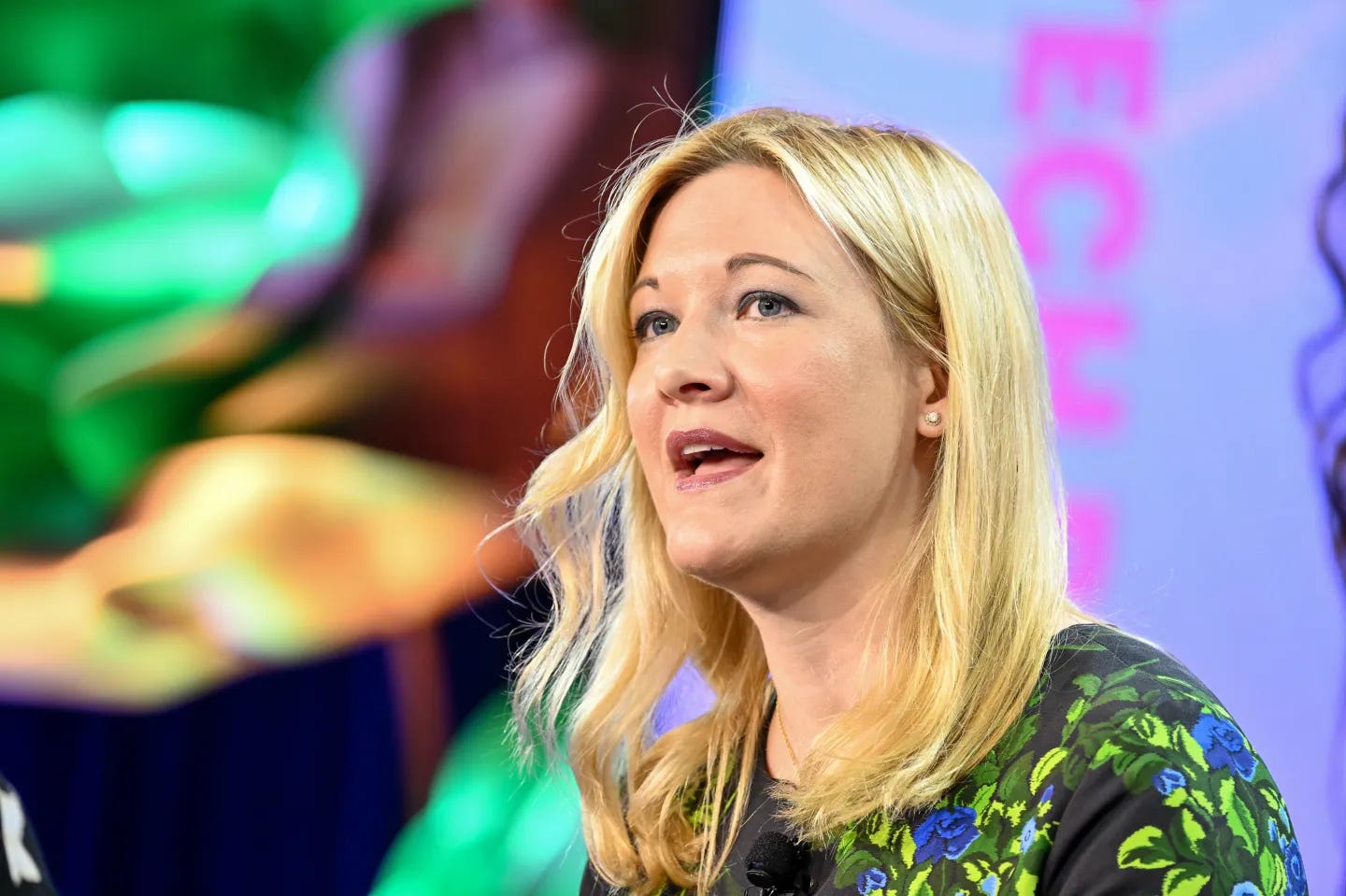
Katherine Boyle
Katherine Boyle is a General Partner at Andreessen Horowitz (a16z), leading their American Dynamism practice. She is a former reporter at The Washington Post (pre-Jeff Bezos era), who transitioned to Silicon Valley via Stanford GSB, then joined Founders Fund and General Catalyst before a16z. Her significance lies in bridging Washington’s policy world with Silicon Valley’s tech innovation, championing investments in sectors supporting U.S. national interests.
The interview’s core focus is Boyle’s career journey—from journalism in a declining media landscape to venture investing—and the launch of a16z’s American Dynamism thesis. It reflects on her pivotal shift to Silicon Valley amid industry disruption, personal culture shocks, and strategic choices in building a new VC vertical. Standout moments include her anecdotes of “cake-ins” at The Post symbolizing layoffs, contrasts between D.C.’s zero-sum power dynamics and Silicon Valley’s abundance mindset, and framing American Dynamism as a post-COVID imperative. The episode frames her narrative through deep dives into contrarian bets (e.g., defense tech), the “why now” timing post-COVID, and exporting Silicon Valley’s model nationwide.
Notable Facts
Boyle left The Washington Post in early 2014, just as Jeff Bezos acquired it, escaping a feared bankruptcy era marked by frequent layoffs signaled by “cake-ins” (cakes wheeled into the newsroom for departing staff).
She was a Style section reporter at The Post, aspiring to write long-form cultural meditations (e.g., a 10,000-word piece comparing Sheetz and Wawa convenience stores), rather than hard-news diligence.
At a16z, she leads the first formal vertical practice for American Dynamism, investing in companies that often become holding companies quickly due to finite talent pools in sectors like aerospace.
Portfolio examples include Flock Safety (Atlanta-based, solving crime via license plate readers, now in 30 states) and Hadrian (L.A.-based, automating machine shops for aerospace/defense, upskilling non-college workers).
She moved to Miami post-COVID, viewing “Silicon Valley” as an idea exportable anywhere, with ~50% of U.S. unicorn founders being foreign-born.
Key Decisions
Transitioning from journalism at The Washington Post to Stanford GSB and Silicon Valley (2014)
Context: Amid media industry collapse and feared firing, Boyle chose to study technology’s disruption of institutions rather than cling to a dying field; her editor encouraged the pivot, noting she was “young enough to do something new.”
Outcome: Culture shock but access to aligned incentives (e.g., CEOs responding to student emails), leading to VC roles at Founders Fund, General Catalyst, and a16z.
Analysis: This contrarian move exemplified abundance mindset over scarcity; by rejecting D.C.’s wait-your-turn hierarchy, she positioned herself at tech’s forefront, influencing her thesis that talent now flows to problem-solving over bureaucracy, boosting U.S. innovation in regulated sectors.
Joining a16z to launch the American Dynamism practice (post-2020)
Context: Inspired by Marc Andreessen’s “It’s Time to Build” and COVID’s revelations, Boyle built a vertical for national-interest companies (e.g., defense, education, housing). Silicon Valley ignored government-adjacent sectors due to regulatory hurdles and J-curve risks, despite historical DOD roots.
Outcome: Early investments like Hadrian and Anduril (from seed at prior firm) soared, proving category viability.
Analysis: Leadership in creating a non-consumer/enterprise bucket countered VC’s software purity bias; by embracing “harder” physical-world plays with longer timelines, a16z captured tailwinds like founder diversification and decentralization, outpacing incumbents in talent-scarce fields.
Investing in Anduril from seed round (~2017, via prior firm):
Context: Despite defense tech’s unpopularity in San Francisco, Boyle backed the modern contractor for its software-driven approach. Recognized government’s outdated procurement and need for private-sector tools.
Outcome: Anduril expanded to multiple offices, partners (Australia, UK), and Ukraine relevance shifted perceptions from contrarian to essential.
Analysis: Her D.C. background anticipated mindset shifts; this decision leveraged competitive dynamics where legacy 1920s contractors lagged, demonstrating how conviction in national security as “American way” preservation yields outsized impact amid geopolitical risks.
Returning investor capital at Hadrian’s precursor to build automated factories from scratch
Context: Founder Chris Power (immigrant from Australia) initially raised a small PE fund for machine shop roll-ups but pivoted upon realizing software retrofits were impossible in aging, artisan-dependent shops.
Outcome: Built new factories serving aerospace/defense, upskilling workers.
Analysis: Rejected consolidation (PE’s cost-cutting) for creation (VC’s growth), addressing supply chain binds; this countered regulatory capture and talent finite pools, reviving 1940s-50s Silicon Valley ethos of hands-on innovation for industry dominance.
Boyle’s personal move to Miami and investing remotely post-COVID:
Context: Chose Florida over Silicon Valley hubs to embody decentralization. Rationale: COVID proved relationships/building possible online; wanted to invest in/export dynamism to hometowns.
Outcome: Sourced deals like Hadrian (L.A.) via networks/Internet, democratizing tech.
Analysis: Challenged geography myths, reducing brain drain; by aligning with remote talent and civic-focused founders (e.g., ex-teachers, DOD procurement officers), it amplified competitive advantages in underserved markets, fostering nationwide abundance.
Key Quotes
“It’s companies that support the national interest.”
Context: Introducing the American Dynamism thesis, encompassing government sellers/competitors in defense, education, housing.
Analysis: Encapsulates her journey from D.C. observer to VC bridge-builder; shifts industry from software isolation to civic integration, linking to trends like post-COVID founder appetite and powers like scale economies in talent-scarce sectors, countering regulatory risks for broader prosperity.
“America is the greatest experiment in human history.”
Context: Why investing in the “American way”is important. Funding infrastructure and defense spurs on continued U.S. prosperity.
Analysis: Rooted in immigrant-family anecdote and ~50% foreign-born unicorn founders; connects to Anduril/Hadrian decisions, reinforcing leadership in contrarian bets that preserve freedom/democracy via tech, yielding industry impact in geopolitical stability.
“The only thing Washington can actually agree on is that they hate big tech, but not enough credence is given to small tech.”
Context: She’s critiquing Washington’s monolithic view of tech, emphasizing early-stage “small tech” as exciting for solving national problems.
Analysis: Reflects her journey from D.C. scarcity to VC creation focus; ties to decisions like napkin-stage investments, addressing industry impact by promoting small businesses amid trends like creator economies and decentralization, reducing risks from regulatory focus on big tech.
“The worst thing that can happen is when all of the talent goes to certain hubs and abandons the rest of the country.”
Context: Warning against talent centralization. She discussed this in the context of post-COVID decentralization and brain drain from states to hubs like San Francisco and New York.
Analysis: Highlights her strategy of exporting Silicon Valley’s model nationwide, linking to trends in remote work and democratization of tech; this underscores decisions like her Miami move and investments in non-hub companies (e.g., Flock Safety), countering competitive risks from geographic myths and fostering powers like network effects for broader U.S. innovation.
“Silicon Valley is an idea, not a place.”
Context: Discussing Miami move and portfolio like Flock Safety in Atlanta.
Analysis: Reflects her culture-shock escape from D.C.; ties to playbook of misfit-driven creation, enabling powers like network effects in remote ecosystems, revitalizing American Dream amid brain drain risks.
Industry Trends
Post-COVID founder diversification and sector shift: Talent now includes non-engineers (ex-teachers, DOD officers) tackling civic problems; significance: Merges culture/counterculture (post-Social Network), enabled by off-the-shelf tools lowering startup costs. Shaped Boyle’s practice launch and moves like Miami; links to Leadership Playbook via mission-alignment, creating advantages in unregulated innovation against legacy holdouts.
Decentralization of tech ecosystems: Founders build in hometowns (e.g., Atlanta’s Flock, L.A.’s Hadrian) via remote/remote talent; significance: Ends brain drain, democratizes opportunity post-war myths. Influenced investments in community-solving companies; reduces risks from Silicon Valley shame/apology culture, amplifying network effects in national-interest markets.
Software permeating physical/civic sectors: Last holdouts (defense, education, housing) untouched for 30 years due to regulation/entrenchment; significance: Reverses cost bloat (e.g., AI graph exemptions), government’s internal builds. Drove decisions like Hadrian’s greenfield factories; counters capture via private tools, linking to powers like counter-positioning against incumbents.
Leadership Playbook
Embrace abundance over scarcity: Reject zero-sum (D.C. power cycles) for positive-sum (equity-driven creation); applied in pivoting from dying journalism to VC, fostering “yes” cultures. Implications: In dynamism sectors, encourages long-term missions (e.g., Anduril’s conviction amid unpopularity), yielding industry resilience via talent attraction.
Conviction in contrarian, mission-aligned bets: Stand firm on unpopular theses (e.g., defense pre-Ukraine); from journalism’s neutral sidelines to investing in national interest. Links to trends like software-government fusion; for industry, builds holding-company leaders in finite-talent fields, out-innovating bureaucracies.
Export incentives nationwide via decentralization: Build anywhere, aligning misfits with real problems; personal Miami move and remote sourcing. Ties to powers like scale in civic tech; implies leadership in reversing centralization, spurring small-tech revolution for broader American prosperity.
Additional Notes
Episode Metadata
Episode Title: Investing in American Dynamism (with Katherine Boyle)
Release Date: June 5, 2022
Duration: 1:22:01
Related Episodes:
Andreessen Horowitz Part I (Season 9, Episode 1, 7/26/2021)
Andreessen Horowitz Part II (Season 9, Episode 2, 8/9/2021)
SpaceX (Season 6, Episode 7, 5/26/2020)
Links:
With their camera investment they are investing in the surveillance state and calling it patriotic.