

Kyle’s Rating: 6/10
While Michael Ovitz proves to be an insanely interesting guest with incredible historical insights, the interview format feels slightly less comprehensive than the show’s standard episodes. It is a solid look at the man behind the agency, but it lacks the rigorous business breakdown of a classic Acquired deep dive.
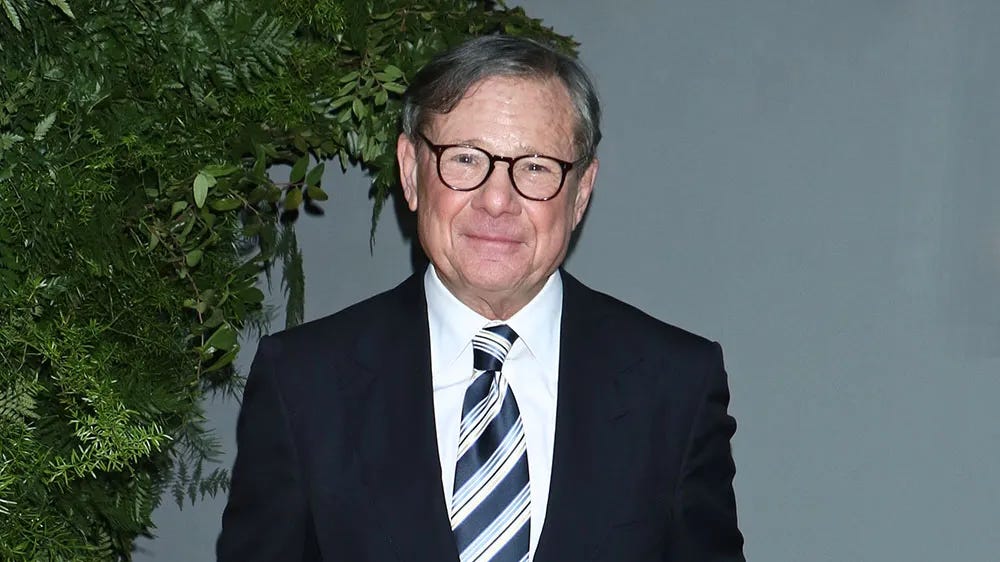
Michael Ovitz
Michael Ovitz is the co-founder of Creative Artists Agency (CAA) and widely considered one of Hollywood’s most influential figures. Known as the architect of the “packaging” model, Ovitz fundamentally shifted power from major studios to talent (actors, directors, and writers). The interview focuses on CAA’s origins, the strategic invention of packaging that allowed talent to capture massive upside, the agency’s expansion into corporate advertising and investment banking, and Ovitz’s eventual transition into Silicon Valley mentorship.
Notable Facts
Jurassic Park Economics: In the Jurassic Park deal, CAA packaged the book (Michael Crichton) and director (Steven Spielberg) to Universal; the creative team retained 50% of gross proceeds, a financial structure previously unheard of in the studio system.
The Coca-Cola Invoice: When CAA produced a minimalist “Timeline” commercial for Coca-Cola on an Apple IIe for roughly $35,000, Coca-Cola sent a $3.5 million check, assuming the low invoice was a mistake because no agency had ever delivered a spot for less.
Talent Monopoly: At CAA’s peak in 1990, the agency represented 45 of the top 50 grossing directors, making it impossible for studios to avoid doing business with them.
Magazine Consumption: To maintain information advantage and “predict culture,” Ovitz subscribed to 200 magazines and required agents to read 100 specific titles monthly, ranging from Vogue to Motor Trend.
Key Decisions
Founding CAA and Breaking from William Morris
Context: Ovitz and partners were frustrated by William Morris’s “old guard” philosophy, exemplified by a staff meeting celebrating the signing of aging star Anne Miller rather than pursuing rising talent like Robert Redford.
Outcome: Five agents left to found CAA with $100,000 capital and zero debt, focusing initially on TV talent to ensure weekly cash flow.
Analysis: This decision recognized the incumbent’s cultural stagnation. By avoiding debt and relying on TV residuals, CAA maintained operational freedom, allowing aggressive pursuit of a “team” model that William Morris refused to adopt.
Inventing the “Package”
Context: Historically, studios bought scripts, then hired directors and cast actors separately. CAA realized they could control the product by assembling script, director, and stars internally before approaching buyers.
Outcome: CAA sold fully formed projects (Ghostbusters, Rain Man, Jurassic Park) to studios on a “take it or leave it” basis.
Analysis: This shifted studios’ role from creator to distributor. By controlling the “scarce commodity” (combined talent), CAA cornered the market and dictated pricing, effectively acting as a studio without overhead.
Pivoting to Corporate Advertising (Coca-Cola)
Context: Coca-Cola executives expressed frustration about losing market share to Pepsi and running the same commercials across incompatible demographics.
Outcome: CAA won the account from 40-year incumbent McCann-Erickson by pitching 30-40 distinct commercials for specific demographics, including creating the famous “Polar Bears.”
Analysis: Ovitz leveraged the agency’s “culture maven” status to outmaneuver traditional ad agencies. Using film directors and outsourcing animation (Rhythm and Hues) rather than maintaining massive staff, CAA delivered higher volume and creativity at lower cost.
Transitioning to Investment Banking (M&A)
Context: Major studios faced financial distress while Japanese hardware giants (Sony, Matsushita) sought content ownership to win format wars (Betamax vs. VHS).
Outcome: Ovitz brokered Columbia/TriStar’s sale to Sony and MCA/Universal to Matsushita, earning massive consulting fees (a $120 million pool for the Matsushita deal).
Analysis: This diversified CAA beyond 10% agency commissions into high-stakes M&A. Ovitz utilized deep study of Japanese business practices to secure deals where traditional banks failed, positioning CAA as savior of the studio ecosystem it relied upon.
Selling CAA to the “Young Turks”
Context: Upon leaving for Disney, Ovitz needed to exit ownership without destroying the agency or causing mass agent exodus.
Outcome: He sold to the next generation of partners for roughly $200 million, financed via interest-free loan paid through future profits.
Analysis: Ovitz prioritized franchise continuity over immediate liquidity or maximum extraction. This structure ensured the “Young Turks” (new leadership) were incentivized to keep the machine running, preserving CAA’s dominance for decades.
Key Quotes
“We would never sell any idea or client unpackaged or naked to a studio ever. Anything we did was pre-packaged where we controlled all the elements and our clients controlled their own destiny.”
Context: Explaining CAA’s core business model innovation.
Analysis: This encapsulates the power dynamic shift; by bundling assets, CAA removed studios’ ability to negotiate line items, forcing them to buy the whole “package” at premium.
“We’re going to sign all those people... we want a monopoly on talent to give us leverage to turn the paradigm around.”
Context: Ovitz’s response to a rival agency partner claiming CAA would never sign stars like Robert Redford or Dustin Hoffman.
Analysis: This highlights the explicit “Cornered Resource” strategy. Ovitz understood that owning majority top-tier talent creates a flywheel effect where the agency becomes the market maker.
“If you had Stripes, Ghostbusters, Gandhi, Twins, Kindergarten Cop... you had a choice. You’d buy the package, or we’d sell it to somebody else because we viewed the studios as distribution entities.”
Context: Discussing CAA’s leverage over studio heads.
Analysis: This redefinition of studios as “distribution entities” rather than creative hubs was the era’s fundamental disruption, commoditizing Hollywood’s capital/infrastructure side while maximizing IP/talent value.
“I do not do one thing different today than I did 30 years ago, not one thing... It’s just the companies that come out public, but they don’t come out on film.”
Context: Reflecting on current Silicon Valley work with founders versus past work with actors.
Analysis: Ovitz draws direct parallels between Hollywood talent and Tech founders. Both require packaging (team/capital), strategy, and protection to maximize creative output value.
“If I’m not successful, I just want my expenses. If I’m successful, I want you to load up a Brinks truck and back it up to my house.”
Context: Negotiating his Matsushita fee for MCA/Universal acquisition.
Analysis: This demonstrates high-risk, high-reward confidence. By waiving upfront retainers (unlike traditional banks), Ovitz signaled buyer alignment and set the stage for unprecedented success payout.
Industry Trends
Trend: The Shift from “The Studio System” to “Free Agency”
The industry moved from an “NFL model” (talent as studio-owned employees) to a free market. CAA accelerated this by preventing clients from signing long-term studio contracts, instead packaging them project-by-project to highest bidders.
Trend: Hardware/Software Convergence
In the late 80s/early 90s, consumer electronics giants (Sony, Matsushita) realized superior hardware (Betamax) lost without content (VHS). This drove consolidation where hardware manufacturers acquired Hollywood studios to secure exclusive “software” for their devices.
Leadership Playbook
Principle: The Team Approach (”No Individual Clients”)
Unlike William Morris, where agents guarded clients jealously, CAA utilized a team system where the whole agency represented every client. This prevented client departures when single agents left and allowed specialized expertise (literary agents for actors) to increase commercial output.
Principle: Information Asymmetry (The “Buck Slip”)
Ovitz enforced rigorous internal communication using “buck slips” (paper notes circulated and signed by recipients). This ensured intelligence gathered by one agent was immediately available firm-wide, creating information advantage over disjointed competitors and studios.
Principle: Cultural Forecasting
Requiring agents to read 100+ magazines monthly wasn’t leisure but trend-spotting (the rise of Asian markets leading to Shōgun) before buyers realized needs. This allowed CAA to propose projects studios hadn’t yet recognized they needed.
Power
Counter-Positioning
CAA counter-positioned against William Morris by adopting collaborative “no individual commissions” compensation. William Morris, entrenched in the “star agent” model, couldn’t replicate without alienating senior staff, allowing CAA to offer better service and steal market share.
Cornered Resource
By aggregating the vast majority of A-list writers, directors, and actors, CAA created a Cornered Resource. Studios couldn’t make high-grossing films without CAA interaction, giving the agency power to set industry-wide prices and terms.
Reflections
Michael Ovitz’s narrative serves as a masterclass in accumulating and leveraging power by redefining labor (talent) and capital (studios) relationships. His journey illustrates that “packaging”, bundling assets to create scarce, undeniable products, is transferable from 1980s Hollywood to modern Silicon Valley venture capital. While his Disney transition exposed friction between entrepreneurial founder mindset and corporate service roles, his legacy remains Hollywood’s complete economic restructuring. The episode concludes recognizing Ovitz’s playbook for managing “creatives” is identical to Andreessen Horowitz’s model for managing “founders.”
Additional Notes
Episode Metadata:
Title: CAA (with Michael Ovitz) (Season 9, Episode 8)
Date: December 21, 2021
Duration: 1:52:13
Related Episodes:
Links:
Who Is Michael Ovitz? (Book)