

Kyle’s Rating: 7/10
A crisp, hour-long masterclass in capital-efficient growth from Zoom’s Eric Yuan and Veeva’s Peter Gassner—two founders who scaled to billions on pennies. Tight pacing delivers sharp nuggets of wisdom on mindset, product excellence, and disciplined hustle without a wasted minute.
Eric Yuan & Peter Gassner
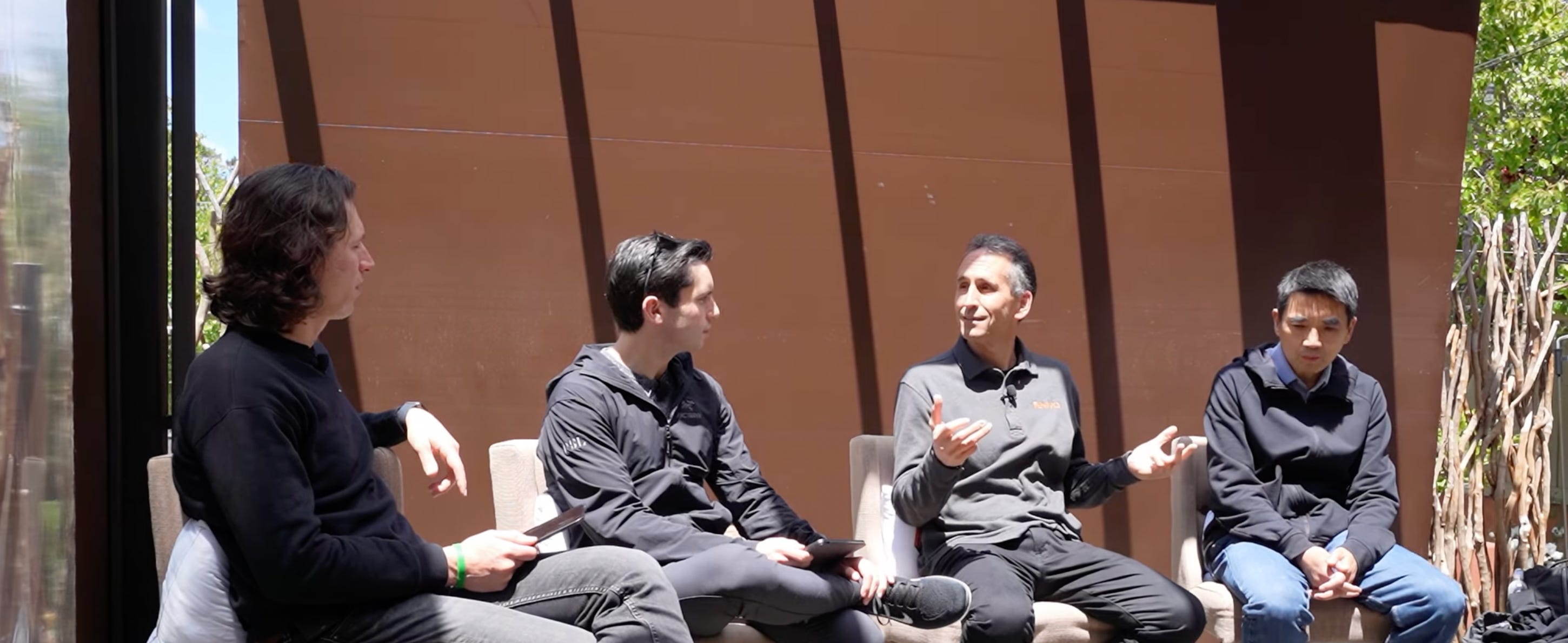
Eric Yuan, Founder & CEO of Zoom; Peter Gassner, Founder & CEO of Veeva Systems. Both engineer-founders built multi-billion-dollar revenue software companies on minimal external capital. Zoom consumed ~$9M from angels (never touching $130M in VC), Veeva raised ~$7M total (never using Emergence’s $4M). The episode compares their capital-efficient growth playbooks in a live Emergence Capital CEO Summit interview, focusing on mindset, product excellence, hiring, sales, marketing, and long-term defensibility.
Notable Facts
Zoom: Started in 2011 with 25 ex-Webex engineers (grew to 40, all coders); no marketing team until 2015, no sales team early on.
Veeva: Raised $3M from angels + $4M from Emergence (2008); reached ~$2B revenue at ~30% margins without consuming Emergence capital.
Zoom: Never spent the $30M Emergence + $100M Sequoia rounds; funded initial product via angels only.
Veeva: First salesperson was Peter himself, pre-incorporation, pre-demo, pre-PowerPoint; landed Pfizer multi-million deal against Salesforce.com opposition.
Both: Peter sits on Zoom’s board; they met via Emergence and share product-first, frugal cultures.
Key Quotes
“Run a profitable lemonade stand.” —Peter Gassner, Veeva
Context: Explaining capital-efficiency mindset.
Analysis: Safety in cash generation; contrasts with growth-at-all-costs SaaS. Ties to Veeva’s immediate profitability and Zoom’s untouched VC rounds; both avoided “valuable to nobody” trap.
“Product excellence as a foundation… if the food doesn’t work, even for free you don’t buy it.” —Eric Yuan, Zoom
Context: Restaurant analogy for video conferencing.
Analysis: 10× better than Webex drove viral adoption; enabled zero marketing spend early. Synergy with Peter’s “excellent product lowers cost of sales.”
“We will win this deal… we have better people that will work harder.” —Peter Gassner, Veeva
Context: Email to Salesforce.com during Pfizer bake-off.
Analysis: Hustle + relationships beat incumbents; Pfizer exec noted Veeva had fewer employees than meeting attendees. Illustrates leverage of confined vertical and “only shot at greatness.”
“Every dollar [from VC] is trust… every day I think how to survive.” —Eric Yuan, Zoom
Context: Post-Webex passion + capital scarcity.
Analysis: Paranoia fueled discipline; screensaver “you are wrong” to doubting VC. Contrasts with Veeva’s relaxed “doesn’t matter” on extra rounds.
“Leader and liked.” —Peter Gassner, Veeva
Context: Internal goal to counter dominance risks.
Analysis: Audits leadership for arrogance/integrity/energy; public commitment raises standard. Defensive power via customer escape-hatch prevention; Eric echoed with constant innovation.
Q&A
Brief overview of your fundraising history up to IPOs
Veeva: Raised $3M from angel investors about 15 months after starting in February 2007, followed by $4M from Emergence Capital around March 2008 during the financial crisis when even opening a bank account was difficult; never actually used the Emergence $4M, getting within $100,000 of needing it before becoming cash-flow positive and going public.
Zoom: Started in 2011 by first opening a Wells Fargo account, then struggled for months with no VC interest; raised $3M seed from friends, followed by another $6M from friends after more VC rejections; later accepted $30M from Emergence and $100M from Sequoia but never touched any of the $130M VC money, relying only on the ~$9M angel funds consumed for initial product development.
Why raise extra $100M at Zoom when already cash-flow positive?
Veeva: For Veeva itself, simply didn’t need more capital as the business was immediately cash-flow positive and that was that; regarding Zoom, it was ultimately Eric’s board-level decision and Peter viewed it neutrally, emphasizing that with a great product and happy customers the extra money neither helps nor hurts—it would all work out fine either way.
Zoom: In the 2016–2017 timeframe, feared a dramatic economic downturn after a seven-year bull market and wanted dry powder for safety despite having no specific plans to spend it; Peter reassured that raising it “doesn’t matter” as long as the core focus on product and customers remained intact, and in hindsight Eric was wrong about the recession but the capital provided psychological flexibility without distracting from efficiency.
Capital efficiency: mindset/culture or business model? What enabled you?
Veeva: Starts fundamentally with a mindset of running a profitable lemonade stand for long-term security—cash-generating businesses are always valuable to someone while non-cash-generating ones eventually become valuable to nobody; pairs this with product excellence, maniacal focus where anything unrelated to product or customer is dismissed as BS (e.g., no conferences in first five years), hard work especially early, and luck in market timing; stresses being an outlier by picking non-obvious verticals that VCs reject, like life-sciences software deemed too small.
Zoom: Shares the same mindset and product excellence (10× better than Webex), with extreme focus and work ethic—Eric worked relentlessly and saw Peter doing the same; required luck in timing (though starting five years earlier or later might have failed) and deliberately chose a “crazy” idea every VC except Emergence rejected, proving capital efficiency is cultural DNA more than the self-serve credit-card model.
How did you validate the “crazy” idea was actually correct?
Veeva: Spoke to three or four potential customers for the first product—all explicitly said they didn’t need it and it wasn’t interesting; ignored the words and probed emotional attachment to current solutions, detecting lack of value and detachment through hesitant responses; all four became customers, confirming the opportunity lay beneath stated objections in a market ripe for disruption.
Zoom: Drew from direct Webex experience two years prior, knowing it “really sucks” alongside unreliable Skype and neglected Google efforts; spent extensive time daily with customers understanding pain points, convinced that building a reliably better solution would at minimum allow survival, though never initially expecting full platform standardization.
Did you aim to build a big company or just profitable/survive?
Zoom: Primary passion was fixing the Webex letdown that felt like failing customers after years of effort, prompting the leave-Cisco decision; only after starting realized raising capital is about trust, not money, leading to daily survival obsession—even waking at night thinking “how to survive”—shifting focus from grand scale to disciplined endurance.
How did you select early hires (especially Zoom’s 40 ex-Webex engineers)?
Veeva: Ensured zero wasted or optional people early to avoid burning cash and complicating decisions, likening it to efficient machinery; Peter himself was the first salesperson, pitching pre-incorporation without hires, demo, or even PowerPoint, building through relationship-based hustle and persistence over months.
Zoom: Brought ~25 top ex-Webex engineers on day one (quickly to 40 total including Eric), all coders except Eric who handled product management, UI design, facilities, QuickBooks, and culture/values writing; funded entirely by angel money, creating a lean, all-engineering machine with no non-essential roles.
How did you get the snowball rolling without sales/marketing?
Veeva: Sold aggressively pre-product—showing up with nothing but vision, returning monthly with incremental progress like a PowerPoint; first small customer bought out of CEO spite against internal IT, barely able to log in; escalated step-by-step to multi-million Pfizer deal won via hand-to-hand combat, bold email claims of superior people/hustle, and positioning as the pharma giant’s “only shot at greatness” despite Veeva having fewer employees than attendees in the room.
Zoom: Got lucky weeks before launch with world-famous reporter Walter Mossberg testing and loving the service, writing a glowing Wall Street Journal article plus personal video; generated 50,000 users overnight (most left but kernel remained); personally emailed cancellers ($9.99 plans), sent small gifts to VIPs, maintained relationships to spark virality through delighted early adopters.
North star metric early?
Veeva: Avoided customer satisfaction surveys entirely in the beginning, believing metrics can hide true feelings when the company is small; instead Peter directly talked to early adopters to get an intuitive human sense of what was really happening.
Zoom: Focused on the happiness and loyalty of the ~100 most dedicated early users remaining after the initial 50,000 surge; doubled down on making them ecstatic to trigger network effects and organic growth, ignoring the 49,900 who churned.
How fund product with customer revenue? Still doable?
Veeva: Absolutely—Pfizer multi-million invoice effectively raised “$3M capital with zero dilution” the moment the check arrived, directly funding development; remains viable today with absolute frugality (treat every $100K hire like buying a million-dollar machine), excellent product to minimize sales cost, high pricing, and easy consumption in a relationship-heavy vertical.
Zoom: Challenging due to low-ticket online users (largest paid only $2K/year, most $9.99/month) making invoicing insufficient for development; online remains profitable but unpredictable with monthly churn risk; now learning enterprise predictability from Peter to manage big customers and build sustainable models.
Multi-year deals or annual?
Veeva: Strictly annual to optimize long-term annual value per customer, avoiding discounts that shrink the market or laziness from lock-in; works in confined life-sciences vertical where pricing transparency across ~2,000 customers (top 20 big, rest smaller) prevents resentment, enabling relationship leverage and “layering the cake” across 20+ products per account.
Zoom: Always better pricing than any competitor across the board to mirror opening a superior restaurant (better food, service, price); horizontal nature with free alternatives demands efficiency—leveraging network effects to deliver equal value with half the sales reps competitors would need.
Defensibility next 30 years?
Veeva: Relentless product excellence plus constant reinvention and expansion to new areas for creative outlets, preventing over-engineering legacy products; internal “leader and liked” goal with leadership audits for arrogance, integrity, and energy to avoid customer escape hatches; aims to become essential and appreciated in automating the $2 trillion life-sciences industry.
Zoom: Treats it like sports—offense is the best defense via paranoia-driven innovation, evolving from unified communications to full collaboration platform with new departmental solutions; always plan next services 2–3 years ahead to stay ahead, maintaining product superiority through ongoing feature/service evolution.
When did you plan/launch second product?
Veeva: Began thinking early 2010 with ~150 employees (3.5 years in), viewing it as a make-or-break pivot to true multi-product status over single-product sale; made first hire fall 2010, deliberately choosing a far-removed offering (different buyer, code, everything) to avoid add-on gravity; risked sinking the rocket-ship core CRM but second product (Vault) now larger with 5–10× future potential.
Zoom: Peter advised Eric ~1 year pre-IPO that new monetizable services should have been built 2–3 years earlier to alter growth trajectory; Eric regrets not planning ahead, realizing single-service limitation and need to always develop the next offering years in advance.
Marketing philosophy & measurement?
Veeva: No direct philosophy stated; implied through product excellence reducing sales cost and relationship maintenance ($100K/year to nurture $100M upside) in a defined vertical where big deals naturally appear.
Zoom: No marketing team first four years to prove product alone wins in mature market—consistent customer feedback of discovering Zoom via trial despite zero awareness; post-2015 built team but measured every dollar ruthlessly (e.g., personally reviewed $200K+/month Google SEM checks, demanded >3× ROI not 1.5×, optimized daily); billboards doubled/tripled after positive validation and morale signals, knowing when to double down or cut.
Hiring seasoned vs. home-grown leaders?
Veeva: Prioritizes range (hands-on yet scalable) and team chemistry over individual skills; loves giving people chances to tackle roles they’ve never done for mojo and fulfillment, avoiding comp-driven decisions—always right person first, then fair pay.
Zoom: Early philosophy: self-motivated, self-learning high-potential loyal talent who grow with company, including executives; post-COVID hypergrowth (15–20× usage, 7× revenue) exposed flaw—team including Eric wasn’t proportionally better; now advocates healthy mix of home-grown potential plus seasoned leaders who’ve scaled bigger, especially post-PMF when sudden takeoff possible.
A+ future / failure case?
Veeva: No bandwidth for failure thinking; A+ means becoming essential (must-use) and appreciated in automating $2 trillion life-sciences, proving profitable companies can also be exemplary societal/employee contributors as a public benefit corporation model others copy.
Zoom: A+ is Zoom as enduring platform company introducing multiple new services people rely on to achieve more, with sustained annual revenue growth for many years; failure would be reverting to Webex-like mediocrity but avoids dwelling—stays optimistic while paranoid about personal best effort, not paralysis.
Leadership Playbook
Product excellence first (Both): 10× (Zoom) or differentiated enough to lower sales cost (Veeva); foundation for efficiency.
No wasted people / frugality (Both): Treat hires like million-dollar machines; zero optional roles early.
Paranoia without paralysis (Yuan): Daily survival thinking; plan services 2-3 years ahead; mix home-grown + seasoned post-PMF.
Additional Notes
Episode metadata:
Special episode, Capital-Efficient Growth (with Zoom CEO Eric Yuan & Veeva CEO Peter Gassner)
Duration: 1:12:20
Release Date: May 18, 2022.
Related episodes:
The Zoom IPO (with Santi Subotovsky) (S4E8, 6/18/2019)
SaaS in 2021 and Emergence Capital’s Deep Collaboration Thesis (LP Show, 3/5/2021)
Nvidia Part II (S10E6, 4/20/2022)
Links: