

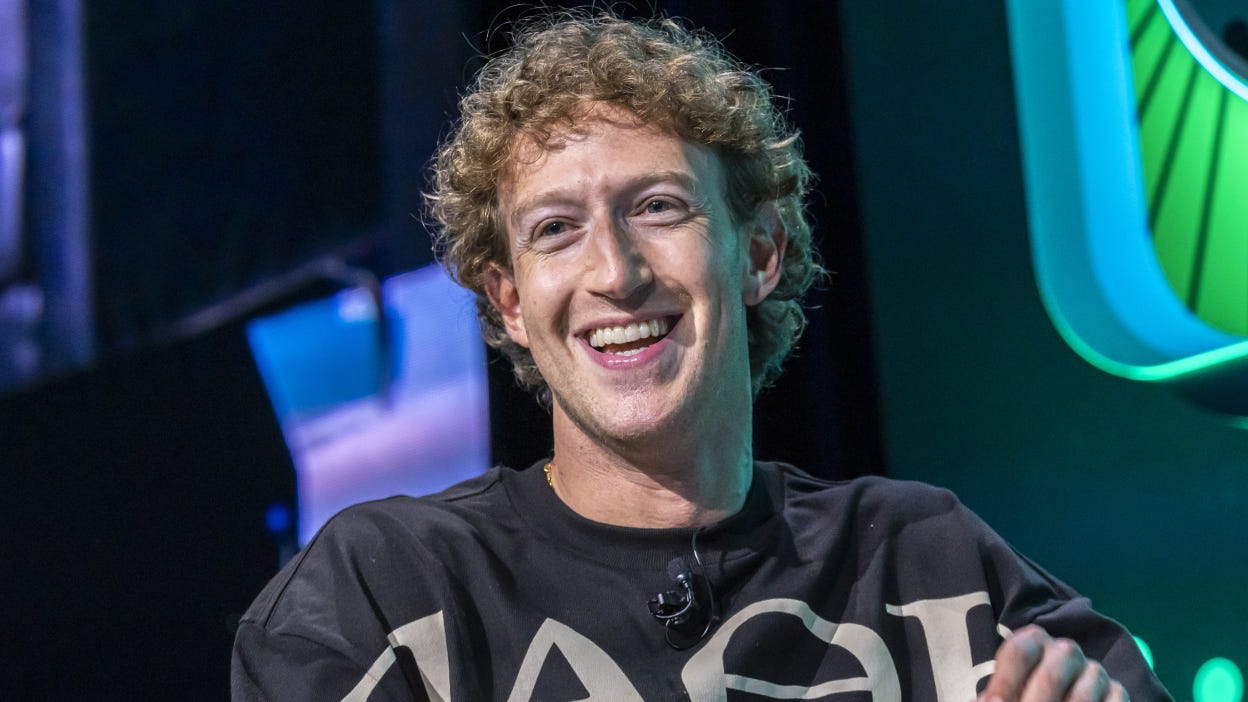
Mark is the iconic founder CEO of our time. At Chase Center on September 10, 2024, he did an unprecedented thing: a live conversation in front of 6,000 people on Meta’s company strategy, sharing stories from early Facebook history, and his thoughts on the future of AI, VR, and AR. Mark was remarkably candid in our discussion, and gave us a window into his real and intense daily demeanor leading Meta. (And his other life endeavors!)
We can't wait to release the complete video of the whole night, including our surprise conversations with Daniel Ek, Emily Chang, and cameo appearances from Jensen Huang and Mike Taylor (the incredible singer of “Who Got the Truth?”). That’s coming in a couple weeks, but for now: enjoy this conversation with Mark Zuckerberg.
Kyle's Rating: 7/10
Mark Zuckerberg's candid reflections in Acquired's live Chase Center interview offer fascinating insights into pivotal decisions—from rejecting Yahoo's $1B offer to betting on AI-powered Meta glasses—all through his "learning through suffering" philosophy. While Ben and David's research prowess and infectious enthusiasm shine when unpacking Meta's resilience, their storytelling strengths don't fully translate to live interviewing, missing opportunities to probe deeper into Zuckerberg's most intriguing strategic choices. The high-energy format and Zuckerberg's unapologetic stance make it compelling, but it lacks the analytical depth of their narrative masterpieces.
Interviewee Overview
Mark Zuckerberg, founder and CEO of Meta Platforms, Inc., is the iconic tech founder-CEO of the modern era, having built a dorm-room project into a global powerhouse influencing billions through platforms like Facebook, Instagram, WhatsApp, and Messenger. His significance lies in redefining social connection through innovations like the social graph and News Feed, while now pushing boundaries in AI and augmented reality (AR) to create holographic human presence. The interview, conducted live at Chase Center on September 10, 2024, before 6,000 people, captures Zuckerberg’s candid reflections on his 20-year journey, from surviving existential threats to betting on holographic experiences. His bold declaration, “I don’t apologize anymore,” signals a shift from reactive crisis management to unapologetic vision. Ben and David engage frame Meta’s success as a turn-based strategy game fueled by Zuckerberg’s curiosity and pain tolerance, unpacking stories of “learning through suffering” and his pursuit of “awesome” products like AI-powered Meta glasses.
Timeline
2004: Launches Thefacebook: Starts as a Harvard dorm project to connect students using social graph concepts from computer science classes, quickly expanding to other colleges.
2006: Rejects Yahoo's $1 Billion Offer: Turns down acquisition amid scaling challenges, leading to management turnover and governance changes for founder control.
2006: Introduces News Feed: Invents the dynamic feed format, shifting social platforms from profiles to ranked updates despite initial backlash.
2012: Pivots to Native Mobile Apps Post-IPO: Rewrites apps from HTML5 to native, inventing feed ads amid mobile surge, enduring a 50% market cap drop over 18 months.
2016: Faces Political Crises: Post-election scrutiny for issues like misinformation begins a period of negative sentiment, leading to a "20-year mistake" in crisis management.
2021: Rebrands to Meta: Shifts company name to reflect metaverse focus, doubling down on AI and AR investments.
2021-Present: Invests in Reality Labs: Commits over $50 billion to AR/VR, releasing products like Ray-Ban Meta glasses with AI, amid an 80% market cap drop in 2022.
Notable Facts
Pioneered the News Feed in 2006, transforming social media from static profiles to dynamic, algorithm-ranked updates that became ubiquitous across apps.
Survived nine existential threats, from MySpace to ChatGPT, by viewing Meta as a "technology company for human connection," enabling adaptability across platforms.
Open-sourced Llama AI models, saving billions through ecosystem standardization and positioning Meta in an ideological battle against closed systems like Apple's.
Invested over $50 billion in Reality Labs to build "awesome" products like AI-powered glasses, aiming for holographic presence as the next computing paradigm.
Admitted a "20-year mistake" in handling post-2016 political crises, shifting to fund academic research for credibility while pushing back on unfounded blame.
Key Decisions
Rejecting Yahoo’s $1 Billion Offer (2006)
Context: Early Facebook grappled with scaling; Yahoo’s offer seemed like a dream exit to the board, but Zuckerberg lacked a short-term sell mindset.
Strategic Rationale: Focused on long-term potential over immediate gains, believing in building something enduring despite no clear financial plan.
Outcome: Team exodus and near-firing; implemented governance changes for founder control, paving the way for Meta’s trillion-dollar valuation.
Ben and David’s Take: They hail it as a foundational "learning through suffering" moment, geeking out over how it solidified Meta’s long-term DNA.
Impact and Analysis: Secured independence to outpace rivals like MySpace, amplifying Zuckerberg’s vision in competitive landscapes, though early hubris risked stability—Ben and David see it as luck-creation through pain tolerance.
Quote: “I hadn’t done a good job communicating the long-term vision.” (Zuckerberg)
Pivoting to Native Mobile Apps (2012)
Context: Post-IPO mobile surge exposed HTML5 apps’ flaws; no mobile ad model existed as desktop traffic declined.
Strategic Rationale: Halt features for a full native rewrite to ensure performance, inventing feed ads to monetize without side columns.
Outcome: Endured 18 months of pain with 50% market cap drop; emerged with mobile dominance and core revenue engine.
Ben and David’s Take: They probe the "quaint" stumble, praising iteration speed as Meta’s edge in learning faster than competitors.
Impact and Analysis: Catapulted Meta into smartphone era, capturing value amid threats like Snapchat, but highlighted platform dependencies—Ben and David view it as a testament to sucking up pain when losing.
Quote: “When you’re losing, it’s often easy to know the right move, it’s just hard to suck it up and do it.” (Zuckerberg)
Open-Sourcing Llama AI Models
Context: Following ChatGPT’s rise, Meta developed leading AI; no edge in keeping it proprietary like Google.
Strategic Rationale: Release openly to foster ecosystems, standardize supply chains, and cut costs.
Outcome: Saved billions via broader adoption; established Llama as an industry standard in open AI.
Ben and David’s Take: They connect it to Meta’s open-source history like LAMP, thrilled by its role in ideological battles against closed models.
Impact and Analysis: Bolstered Meta’s AI position versus OpenAI, democratizing tech for vibrant development, though commoditization risks loom—Ben and David see it as amplifying community smarts.
Quote: “There are more smart people outside our company than inside.” (Zuckerberg)
Investing Over $50 Billion in Reality Labs
Context: 2021 rebrand amid COVID introspection; AR/VR tech lagged, coinciding with recession.
Strategic Rationale: Will "awesome" experiences like holographic presence into existence, controlling destiny against platform taxes despite short-term pain.
Outcome: Shipped Ray-Ban Meta glasses, validating AI/AR integration.
Ben and David’s Take: They marvel at it as Zuckerberg’s internal "blue origin," geeking out over the ambition to smash through barriers.
Impact and Analysis: Positions Meta for next platforms versus Apple, inspiring optimism but straining investors—Ben and David critique it as legacy-defining curiosity in action.
Quote: “We’re going to build more things that are awesome.” (Zuckerberg)
Navigating Political Crises Post-2016
Context: Election aftermath brought blame for misinformation; sentiment flipped from positive to persistently negative.
Strategic Rationale: Initially owned issues corporately to fix them; later funded research and pushed back to separate fact from political scapegoating.
Outcome: Over-ownership caused a "20-year mistake" and brand damage; refined principles for clearer navigation, with ongoing recovery.
Ben and David’s Take: They frame it as a pain-tolerance test, candidly unpacking Zuckerberg’s regret over misdiagnosis while praising his evolved firmness.
Impact and Analysis: Hurt Meta’s reputation but honed resilience against rivals like Twitter; curiosity-led research rebuilt credibility—Ben and David see it as a long lesson amplifying strategic clarity.
Quote: “I think we just fundamentally misdiagnosed the problem.” (Zuckerberg)
Yahoo Offer: $1 billion, rejected; led to trillions in later valuation.
Mobile Pivot Impact: 50% market cap drop over 18 months; recovered via mobile ads.
Llama Savings: Billions from ecosystem standardization; exact figures sparse.
Reality Labs Spend: $50+ billion, long-term bet; revenue data limited.
Political Crisis Duration: 20-year mistake, ongoing recovery; no specific financial metrics provided.
Key Quotes
"Nah, just kidding. I don't apologize anymore."
Context: Early in the interview, responding to Jensen Huang's video on apologies, setting a defiant tone for discussing challenges.
Explanation: Signals Zuckerberg's shift from over-apologizing amid scrutiny to candid, unfiltered leadership.
Impact: Reshapes Meta’s image as bolder, aligning with his "new era," but risks backlash; Ben and David note it as growth from political lessons, amplifying his pain-forged resilience.
"Pathemathos, learning through suffering."
Context: Explaining his custom shirt, tying it to family and Aeschylus, framing entrepreneurship's hardships.
Explanation: Highlights how pain reveals values, a core theme in Zuckerberg’s journey from Yahoo rejection to crises.
Impact: Built Meta’s culture of endurance, enabling threat survival.
"We're a technology company that is focused on human connection, not a specific type of app."
Context: Explaining Meta’s winning streak against threats like TikTok, emphasizing broad identity.
Explanation: Underscores adaptability, viewing apps as tools for connection, from feeds to holograms.
Impact: Enabled pivots across eras, scaling to 3.3 billion users; Ben and David hail it as DNA’s "through line," outlasting competitors.
"If we can learn faster than every other company. We're going to win."
Context: Describing product strategy, stressing curiosity and iteration over polish.
Explanation: Prioritizes feedback loops, contrasting with Apple’s approach, for quicker improvements.
Impact: Drove edges like AI glasses prototypes; Ben and David analyze it as competitive fuel, though risking unpolished ships.
"We’re going to build more things that are awesome."
Context: Shifting from "good" utilities to inspiring “awesome” innovations like AR, post-COVID reflection.
Explain: Marks maturation toward uplifting tech, evoking optimism beyond daily tools.
Discuss Impact: Fuels Reality Labs’ ambition, transforming industries; Ben and David see it amplifying legacy, despite investor strains.
Industry Trends
Mobile Surge: Zuckerberg’s term for smartphone shift; forced app rewrites and ad innovation, critical for capturing mobile-first users.
AI Transformation: “Massive transformation” in AI; enables contextual assistants in Meta glasses, reshaping social tools.
AR Holographic Displays: “Next computing platform”; novel stacks for glasses aim for immersive presence, moving beyond phones.
Open vs. Closed Ecosystems: Zuckerberg’s “ideological battle” for open platforms (e.g., Llama) vs. Apple’s closed model; vital for developer freedom.
Leadership Playbook
Learn Through Suffering: “Pathemathos” shapes values through challenges, as seen in Yahoo and political crises.
Curiosity and Fast Iteration: “If we can learn better than anybody else, you’ll ship faster and learn quicker,” prioritizing feedback over polish.
Technology for Human Connection: Meta’s tech-first identity drives adaptability, unembarrassed to learn from others’ successes.